
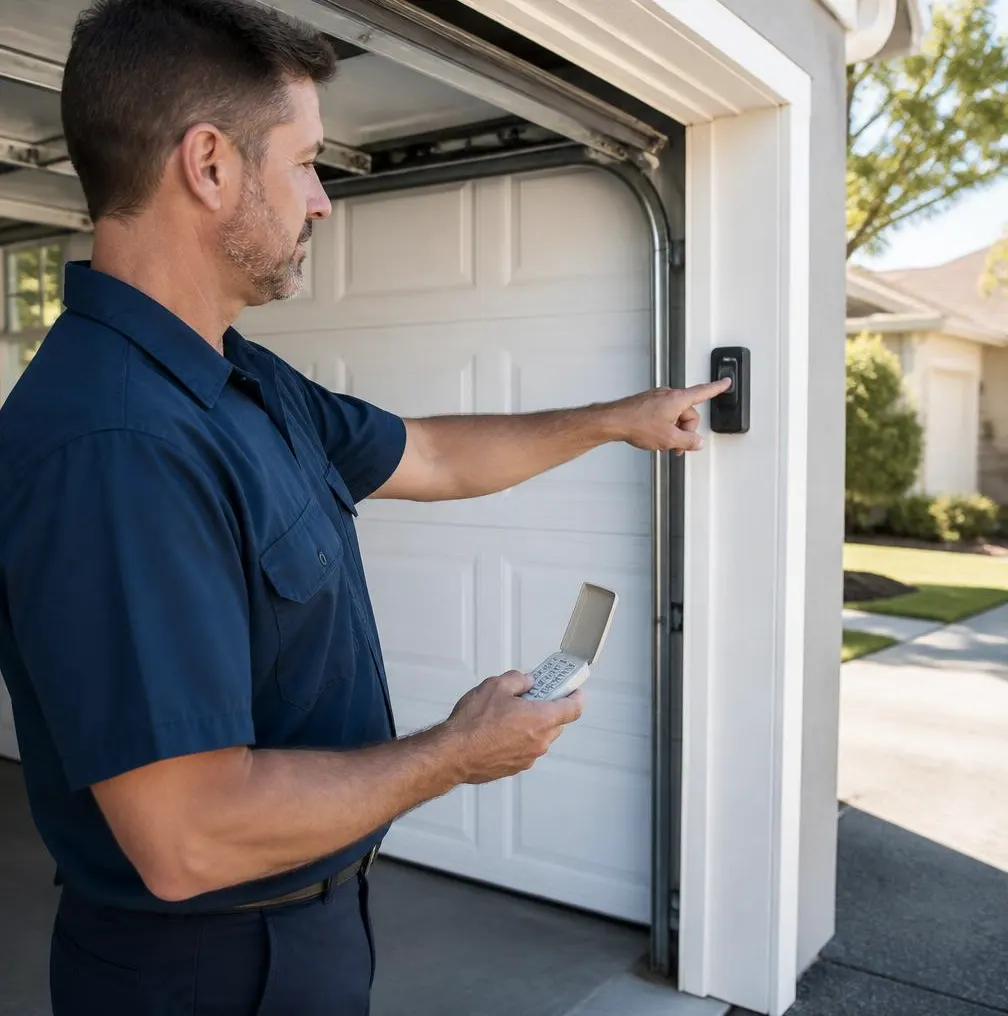
What a Technician Sees on This Kind of Call
It usually starts with two people on speakerphone. The tenant says the door's been grinding for weeks and the landlord never fixed it. The landlord says nobody told them, or they thought the tenant was supposed to handle "small stuff." By the time a technician gets out to an older rental in this area, the cable has jumped the drum, the opener is straining against a dead spring, and what would've been a quick fix is now a bigger bill — and nobody's sure whose name goes on it.
This happens constantly with the older housing stock around here. A lot of these garage doors are original to the house, which means original springs, original rollers, and openers that have outlived at least one owner. Add in freeze-thaw cycles, road salt tracked in on tires, and humid summers that swell wood panels, and these doors need more attention than most people assume — especially when nobody's clearly in charge of giving it to them.
The General Rule of Thumb
There's no single law that spells this out for every property, so the real answer lives in the lease. But in the absence of specific lease language, most rental situations follow a common-sense split:
- Landlords are generally responsible for the structural and mechanical condition of the door — springs, cables, the opener unit, track alignment, and anything that was broken or worn out before the tenant moved in.
- Tenants are generally responsible for day-to-day use and damage they cause — backing into the door, letting kids slam the remote button repeatedly, ignoring an obvious problem until it gets worse, or failing to report something that was clearly working fine at move-in.
The gray area is maintenance: lubricating hinges, keeping the track clear of debris, checking the auto-reverse safety feature. Good leases assign this explicitly. Most don't. That's where the arguments start.
What Actually Breaks, and Who Usually Owns It
Springs and Cables
Torsion and extension springs wear out from age and cycles, not from anything a tenant did wrong. If a spring snaps after years of normal use, that's a landlord repair. If a cable frays because someone tried to force a door that was already off-track, that's murkier and often falls on whoever caused the damage.
The Opener
Openers fail for a mix of reasons — age, power surges, worn gears, or a sensor that's been knocked out of alignment. If the opener simply dies of old age, that's a landlord expense. If a tenant disconnects the safety sensors because they were "annoying" and something gets damaged as a result, that's on them.
Rollers, Tracks, and Panels
Rust and corrosion from winter road salt and humidity are wear-and-tear issues — landlord territory. A dented panel from a car bumper or a basketball is tenant-caused damage.
Weatherstripping and Seals
This one's often overlooked entirely. Cracked or missing bottom seals let in cold air, meltwater, and pests. It's cheap to replace and almost always falls under routine maintenance, which should be the landlord's job unless the lease states otherwise.
What to Inspect at Move-In (Before You Sign Anything)
A five-minute walkthrough at move-in saves both sides a lot of frustration later. Walk through this together and write down what you find:
- Open and close the door manually (disconnect the opener first) to feel for resistance, grinding, or uneven movement.
- Check the springs above the door for visible rust, gaps, or stretching.
- Test the auto-reverse safety feature by placing a 2x4 flat on the ground under the door as it closes — it should reverse immediately on contact.
- Inspect the bottom seal for cracks, gaps, or chunks missing — a common issue after a few freeze-thaw winters.
- Listen to the opener run through a full cycle. Grinding, slow response, or a chain that looks slack are all flags.
- Check the remote and keypad to confirm both work and the codes haven't been left wide open to a previous tenant.
- Photograph everything, dated, and attach it to the lease or send it in an email to the landlord. This single step prevents almost every future dispute.
If anything looks questionable, get it in writing before move-in — who's fixing it, and on what timeline. Verbal promises evaporate fast once someone's already moved their boxes in.
When to Call Telford Garage Door
Whether you're the landlord trying to confirm a repair is legitimate or the tenant trying to document a problem before it gets blamed on you, an outside opinion settles the argument fast. We're called into these situations often enough that we know what to look for — whether a spring failed from age versus misuse, or whether an opener's issue is mechanical or electrical.
Our Garage Door Maintenance service is a smart move at move-in regardless of who pays: a full inspection, lubrication, and safety check that creates a clear baseline everyone can point back to later. If something's already broken, our Garage Door Repair team can diagnose the actual cause and give you a straight answer in writing — which is exactly what you need when a lease dispute is on the table.
If you're dealing with a garage door disagreement at a rental property in Telford, Souderton, Lansdale, Harleysville, Franconia, Perkasie, Sellersville, or Hatfield, call Telford Garage Door. We'll tell you what's actually wrong, not just what's convenient to hear.